01 / Start here
Guides, newest first


02 / What we recommend
Services we have checked
We include products and services we think are useful. If you buy through links on this page, we may earn a commission. Here is how we pick.
At-home lab tests
4.0
Everlywell
Best for readers who want a baseline or a between-visit check on a specific marker and will take the result to a clinician.
Everlywell is a reasonable way to get a finger-prick A1C, lipid or testosterone number without a clinic visit, at $49 to $149 a test, with CLIA-lab processing and physician review. It is a screening tool, not a diagnosis, and it is not sold in New York.
HbA1c $49; cholesterol and lipids $49; heart health panel $99
03 / Numbers to track
Biomarkers that matter here
How to use this section
This section is for the moment you are holding a lab report. Work through it in three steps. First, find the number in the biomarker library and read the row for your sex, age or pregnancy status, with the body that sets it and that body's date. Second, open the guide below for the decision the number raises. Third, before you act on it, check whether the definition you are reading needs a repeat result or a set duration, because most of them do. If you have not had blood work yet and want to know what to ask for, start with Blood tests worth getting every year or build a screening plan for your age and sex.
One result is rarely the answer
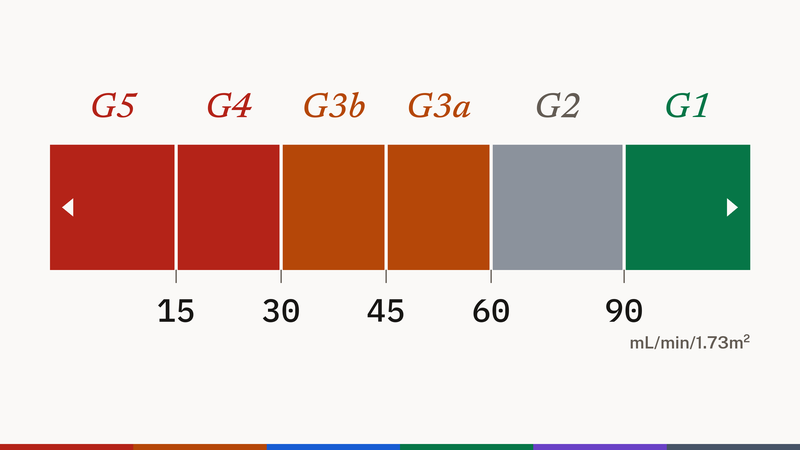
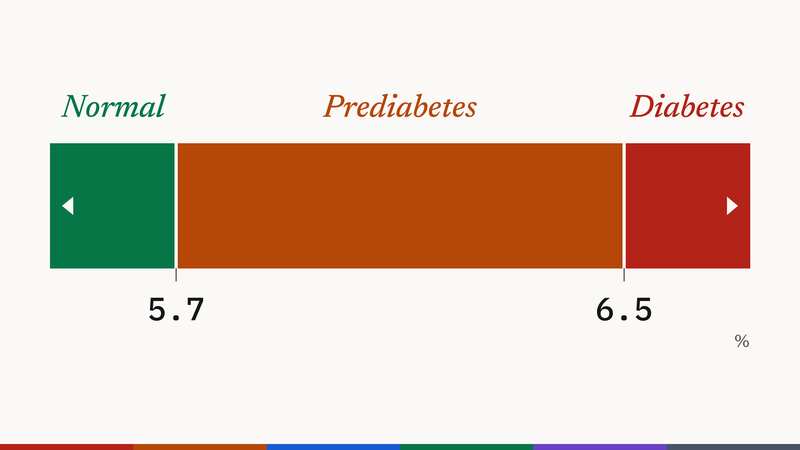
The definitions behind the common lab diagnoses are written to resist a single bad draw. The KDIGO 2024 kidney guideline defines chronic kidney disease as abnormalities of kidney structure or function present for a minimum of 3 months, with an eGFR under 60 one of those abnormalities, so one low eGFR is a reason to repeat the test, not a diagnosis; Low eGFR: what the stages mean explains the rest. The ADA asks for a second abnormal result to confirm a diabetes-range A1C or glucose unless the diagnosis is clinically clear, and says a result close to a diagnostic threshold should prompt a repeat test in 3 to 6 months.
Context can move the line itself. WHO's 2020 ferritin guideline treats a ferritin below 15 µg/L as iron deficiency in an otherwise healthy adult, but says that in someone with infection or inflammation a ferritin below 70 µg/L may be used to indicate iron deficiency, because inflammation raises ferritin. The same number can be normal on one report and deficient in a different clinical picture. Ferritin normal range walks through why the lab's interval and WHO's thresholds disagree.
Reference ranges describe healthy people, not verdicts
MedlinePlus, from the National Library of Medicine, explains that reference ranges are based on test results from large groups of healthy people, and that it is common for healthy people to sometimes have results outside them. Some cutoffs are built that way deliberately: WHO's 2024 hemoglobin guideline sets its anemia cutoffs at the 5th percentile and states that 5 percent of healthy individuals will still fall below them. Normal hemoglobin levels and TSH normal range are both, at heart, about this: where a percentile ends and a problem begins. MedlinePlus also notes that results from different labs cannot be compared directly, so for a trend over time, use the same lab.
Preparing for the draw
Ask what the order includes before you skip breakfast. A fasting plasma glucose means no caloric intake for at least 8 hours, per the ADA. A standard cholesterol panel usually does not need it: the 2016 joint consensus of the European Atherosclerosis Society and the European Federation of Clinical Chemistry and Laboratory Medicine recommends routine non-fasting lipid profiles, with fasting considered when non-fasting triglycerides are above 440 mg/dL (5 mmol/L). What is a normal non-fasting triglyceride level? explains why the non-fasting flag sits at 175 mg/dL rather than 150. If the order mixes tests, follow the laboratory's instructions for the strictest one.
When an at-home test is enough
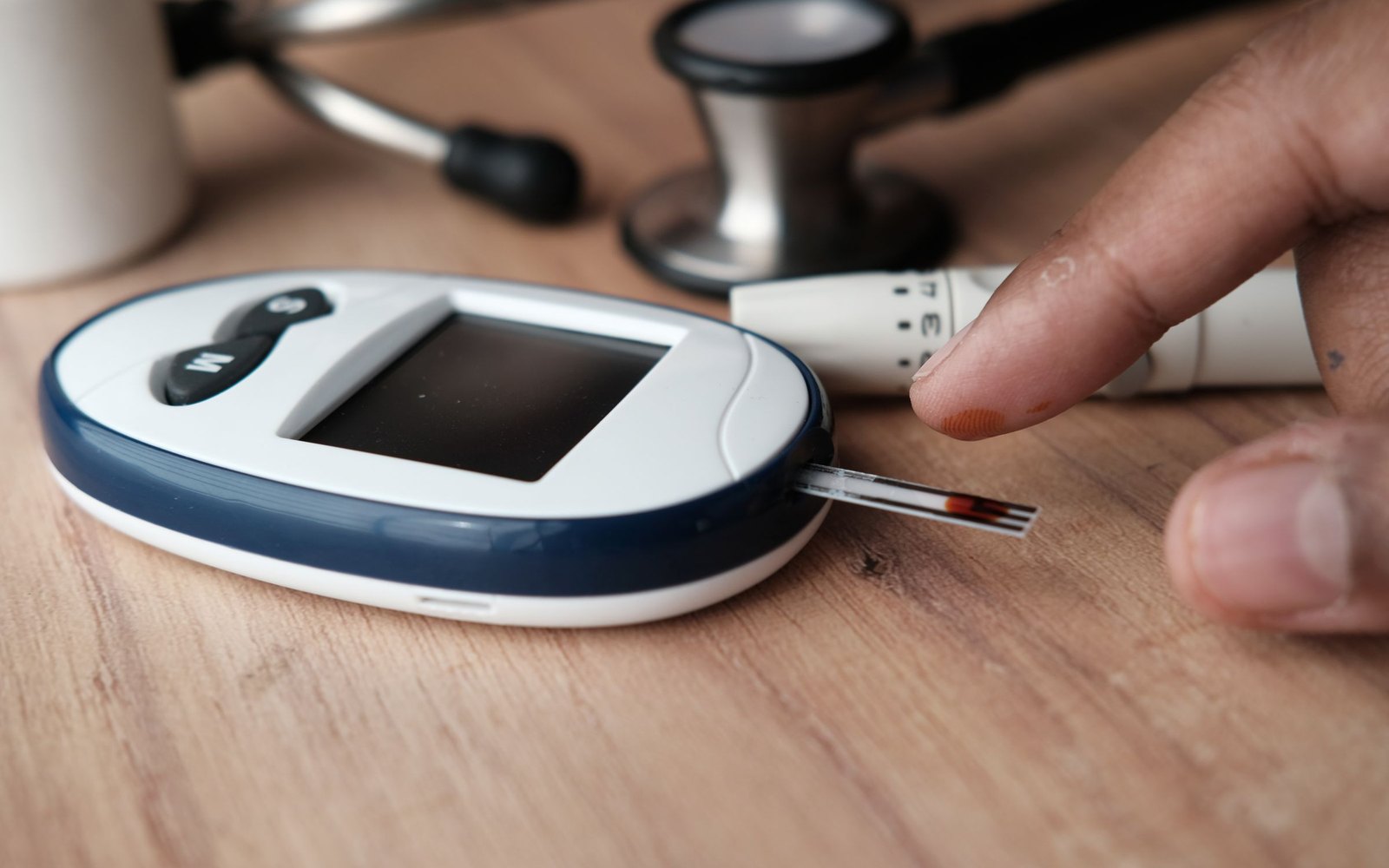
A finger-prick kit is a reasonable way to get a baseline, or to check one marker between visits, and the at-home service we have reviewed is listed above with its commission disclosed. It is not a way to be diagnosed. The ADA restricts point-of-care A1C testing for diabetes screening and diagnosis to devices the FDA has approved for diagnosis, used in CLIA-certified laboratories that perform moderate-complexity testing or higher, and its diagnostic A1C must come from a laboratory method that is NGSP certified and standardized to the DCCT assay. So treat an abnormal home result as a reason to book a laboratory test, and a normal one as a single data point, not an all-clear.
Find the guide for your number
Each guide below starts from a specific result and ends with what usually happens next.
- A1C and glucose: What your A1C means, and the conditions that make it wrong; Does a normal A1C change with age or sex?; and the A1C to average glucose converter.
- Kidneys: eGFR by age; A high creatinine that is not kidney damage; At what eGFR do you have to stop metformin?
- Blood counts and iron: What hemoglobin level is too high?; What hemoglobin level is critically low?; Vitamin B12 levels: the gray zone between 200 and 400.
- Liver: High ALT on a blood test; What does a FIB-4 score mean?
- Uric acid: High uric acid without gout.
To place a single value in its band with the source beside it, use the lab result lookup.
Frequently asked questions
My result is flagged just outside the range. Should I worry?
Usually it is a reason to look again rather than to worry. MedlinePlus notes that reference ranges come from large groups of healthy people and that healthy people sometimes fall outside them, and some cutoffs, like WHO's hemoglobin cutoffs, are set at the 5th percentile, so 5 percent of healthy people fall below them by design. Whether a flag matters depends on the other results, any symptoms, and whether it repeats.
Do I need to fast before a blood test?
Only for some tests. A fasting plasma glucose needs at least 8 hours without caloric intake, per the ADA. A routine cholesterol panel generally does not: the 2016 EAS and EFLM consensus recommends non-fasting lipid profiles as routine, with a fasting repeat considered when non-fasting triglycerides are above 440 mg/dL. When an order includes both, follow the laboratory's instructions.
Can an at-home test diagnose diabetes or kidney disease?
No. The ADA limits A1C testing for diagnosis to FDA-approved diagnostic devices in CLIA-certified laboratories doing moderate-complexity testing or higher, and requires confirmation; KDIGO requires a kidney abnormality to be present for at least 3 months before it counts as chronic kidney disease. A home result is a reason to get a laboratory test, not a substitute for one.