The numbers, trial by trial
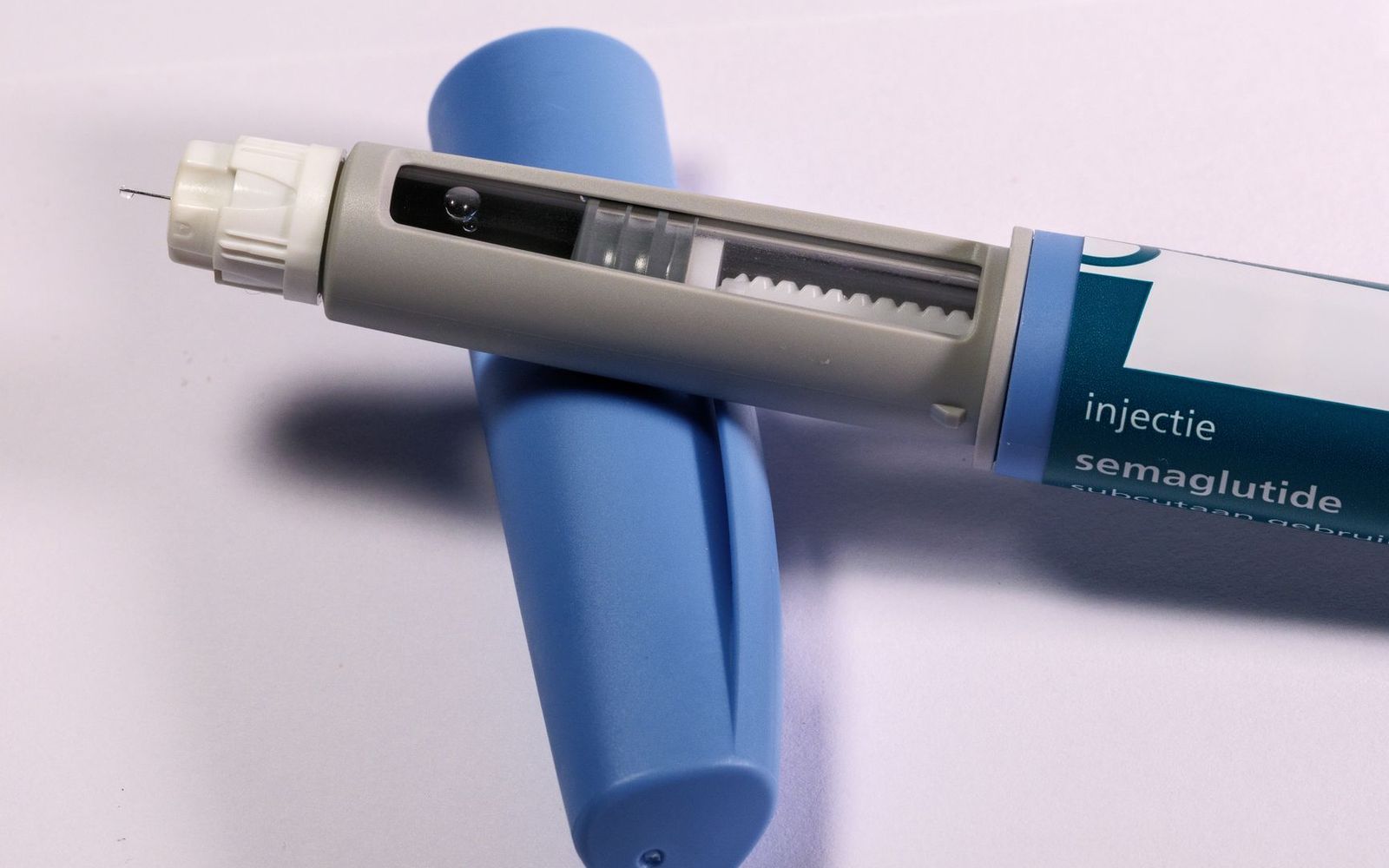
Ozempic and Wegovy are the same molecule, semaglutide, and the withdrawal trials were run with the 2.4 mg weight-management dose in adults without diabetes. Zepbound is tirzepatide. Between them, three trials answer the question directly, because each one took the drug away from people who had lost weight on it and kept measuring.
| Trial | Drug and time on it | Loss before stopping | Off the drug | Staying on the drug | Window |
|---|---|---|---|---|---|
| STEP 1 extension (2022) | Semaglutide 2.4 mg, 68 weeks | 17.3% | +11.6 points regained; net 5.6% below start | not studied (everyone stopped) | 52 weeks |
| SURMOUNT-4 (2024) | Tirzepatide 10 or 15 mg, 36 weeks | 20.9% | +14.0% | a further 5.5% loss | 52 weeks |
| STEP 4 (2021) | Semaglutide 2.4 mg, 20 weeks | 10.6% | +6.9% | a further 7.9% loss | 48 weeks |
The STEP 1 extension is the one to read first, because it is the only one of the three in which everyone stopped and nobody was given a maintenance option. The trial's lifestyle program ended at the same time as the drug, so the regain it measured is drug and support withdrawn together. Published in Diabetes, Obesity and Metabolism in 2022, it followed 327 participants for a year after their 68 weeks of treatment ended. The semaglutide group had lost 17.3 percent of their body weight; a year off the drug they had regained 11.6 percentage points of it, leaving them 5.6 percent below where they started. The authors' own summary: participants "regained two-thirds of their prior weight loss". That two thirds is our arithmetic on their numbers (11.6 divided by 17.3), and it is the figure to carry in your head.
SURMOUNT-4, published in JAMA in January 2024, is the randomized version of the same question for tirzepatide. The 670 people who completed 36 weeks on the drug had lost 20.9 percent on average; they were then randomly assigned to keep taking it or to switch to placebo for 52 weeks. The placebo group regained 14.0 percent of their week-36 weight. The group that stayed on tirzepatide lost a further 5.5 percent. Only 16.6 percent of the placebo group still held on to at least 80 percent of what they had lost at the end, against 89.5 percent of the people who kept the drug.
STEP 4, published in JAMA in 2021, did the same for semaglutide with a shorter run-in: 20 weeks on the drug and a 10.6 percent loss, then 48 weeks of either continued semaglutide or placebo. Placebo regained 6.9 percent; continued treatment lost another 7.9 percent, a gap of 14.8 percentage points. The Wegovy label prints these results as its Study 5 and adds a caveat worth repeating: only people who tolerated the full 2.4 mg dose were randomized, so the results "may not reflect the experience of patients in the general population who are first starting" the drug.
Why the weight comes back
The pharmacology is the plain part. The Ozempic label gives semaglutide a half-life of "approximately 1 week"; the Zepbound label gives tirzepatide "approximately 5 days". The Wegovy label says semaglutide stays in circulation for about 5 to 7 weeks after the last dose. The Zepbound label gives no equivalent figure; five half-lives clear about 97 percent of a drug, which is our arithmetic, so tirzepatide is about 97 percent cleared in roughly three and a half weeks. Whatever the drug was doing to appetite and to how long food sits in the stomach stops on that timeline. The Wegovy and Ozempic labels use the same long half-life to set the two-month gap they require before a planned pregnancy.
The harder part is what the trials say about the condition rather than the drug. The STEP 1 extension authors conclude that their findings "confirm the chronicity of obesity and suggest ongoing treatment is required to maintain improvements in weight and health". Both STEP 4 arms and both SURMOUNT-4 arms received lifestyle intervention throughout, diet and physical activity counseling included, and the placebo arms regained anyway. In trial conditions, the lifestyle program that ran alongside the drug did not hold the weight once the drug was gone.
What comes back besides the weight
The STEP 1 extension measured this directly: "Cardiometabolic improvements seen from week 0 to week 68 with semaglutide reverted towards baseline at week 120 for most variables." STEP 4 shows the same thing from the other side. Compared with the people switched to placebo, those who continued semaglutide lost 9.7 cm more from their waist and 3.9 mm Hg more from their systolic blood pressure between weeks 20 and 68, with a better physical-functioning score. The blood pressure, the waist and the lipid numbers that improved on the drug are borrowed on the same terms as the weight.
The weight did not come all the way back. At week 120 the STEP 1 extension group was still 5.6 percent below its starting weight, and at week 88 the SURMOUNT-4 placebo group was still 9.9 percent below where it began. A year off the drug is not a return to the starting line; it is a return of most of the distance.
Sponsored option
Vetted Aug 19, 2026Affiliate link, we may earn a commission at no extra cost to you.

Sesame Our score 4.0/5
Telehealth / primary care
Pricing as of Aug 19, 2026
Telehealth visits from $34; weight-loss program $99/mo or $59/mo annual
Stop or continue: what the decision actually weighs
Put the trials together and the choice is between a drug that must be taken indefinitely to keep its result and a result that mostly reverses within a year without it. Neither of those is a reason to feel you failed at something. Three things decide it in practice. The first is cost, because indefinite means every month: our guides cover the cash price of Wegovy and Zepbound and what insurance, Medicare and Medicaid pay, and the program directory lists what each online program charges on top of the drug. The second is tolerance: 14.4 percent of SURMOUNT-4 participants left before randomization, adverse events the most common reason, and the Wegovy label reports 4.3 percent of adults stopping for gastrointestinal reactions against 0.7 percent on placebo (hair loss has its own guide). The third is what the weight was for. If it was blood pressure or A1C, those numbers are the ones to watch after stopping, because the trials say they travel with the weight.
When stopping is the right call
The labels themselves name the situations. Pregnancy: the Wegovy and Ozempic labels say to discontinue at least two months before a planned pregnancy because semaglutide stays in the body so long, and the Wegovy and Zepbound labels say to stop when a pregnancy is recognized. Pancreatitis: the label instructs patients to "discontinue WEGOVY promptly and contact their physician if pancreatitis is suspected", the symptom being severe abdominal pain that may radiate to the back. Surgery: all three labels now carry the same paragraph about rare reports of pulmonary aspiration under general anesthesia in people whose stomachs had not emptied despite fasting, and all three say the data are "insufficient to inform recommendations" on whether to pause the drug beforehand. That is a conversation to have with the anesthesiologist, not a decision to make alone.
Switching is not stopping. If you are moving from the Wegovy injection to the Wegovy pill, the label gives the schedule: start the 25 mg tablet one week after the last 2.4 mg injection. Going the other way, start the injection the day after the last tablet. Moving to a different drug entirely is a prescriber's call, and our comparison of every approved GLP-1 lays out what each label reports.
If you stop anyway
The honest summary of the evidence is that the trials' own lifestyle programs did not prevent regain, so nothing on this page can promise that yours will. What the trials do support is watching the right things. Weigh in on a schedule and expect the regain to be gradual rather than sudden; in STEP 1 the year off the drug returned two thirds of the loss, not all of it. Re-check the numbers the weight was carrying, blood pressure and A1C especially, because they moved back in the same window. And protect what rapid weight loss costs in the first place: our guides on protein after 40 and strength training after 40 cover keeping lean mass, which is worth doing whether or not the scale moves.
Frequently asked questions
Does the weight come back all at once?
No. In the STEP 1 extension the regain accumulated over the full year off the drug, and at the end of it participants were still 5.6 percent below their starting weight. In SURMOUNT-4 the placebo group regained 14 percent over 52 weeks and was still 9.9 percent below its week-zero weight at the end.
Will I end up heavier than before I started?
Not on average, in the windows these trials measured. A year off semaglutide, the STEP 1 extension group was 5.6 percent below its starting weight; at week 88 the SURMOUNT-4 placebo group was 9.9 percent below. Neither trial followed people longer than that, so what happens in year two is not measured here.
Can I pause for a few weeks and restart?
The Wegovy label treats a gap as a restart: if two or more consecutive weekly doses are missed, it says to "reinitiate dosage escalation at a lower dosage to reduce the risk of gastrointestinal adverse reactions". A single missed Ozempic dose can be taken within five days, and a Zepbound dose within four; beyond that the label says to skip it and take the next one on schedule. The Ozempic and Zepbound labels set no rule for longer gaps, so how to restart after one is your prescriber's call, and the regain data above apply to the time you are off.
Is this different for Ozempic than for Wegovy?
The molecule is the same and so is the half-life, about one week. The withdrawal trials were run at the 2.4 mg Wegovy dose in adults without diabetes, so the exact regain figures come from that population. None of the three trials on this page enrolled people with type 2 diabetes, so this page does not claim numbers for them.