What the FDA approved, in its own words
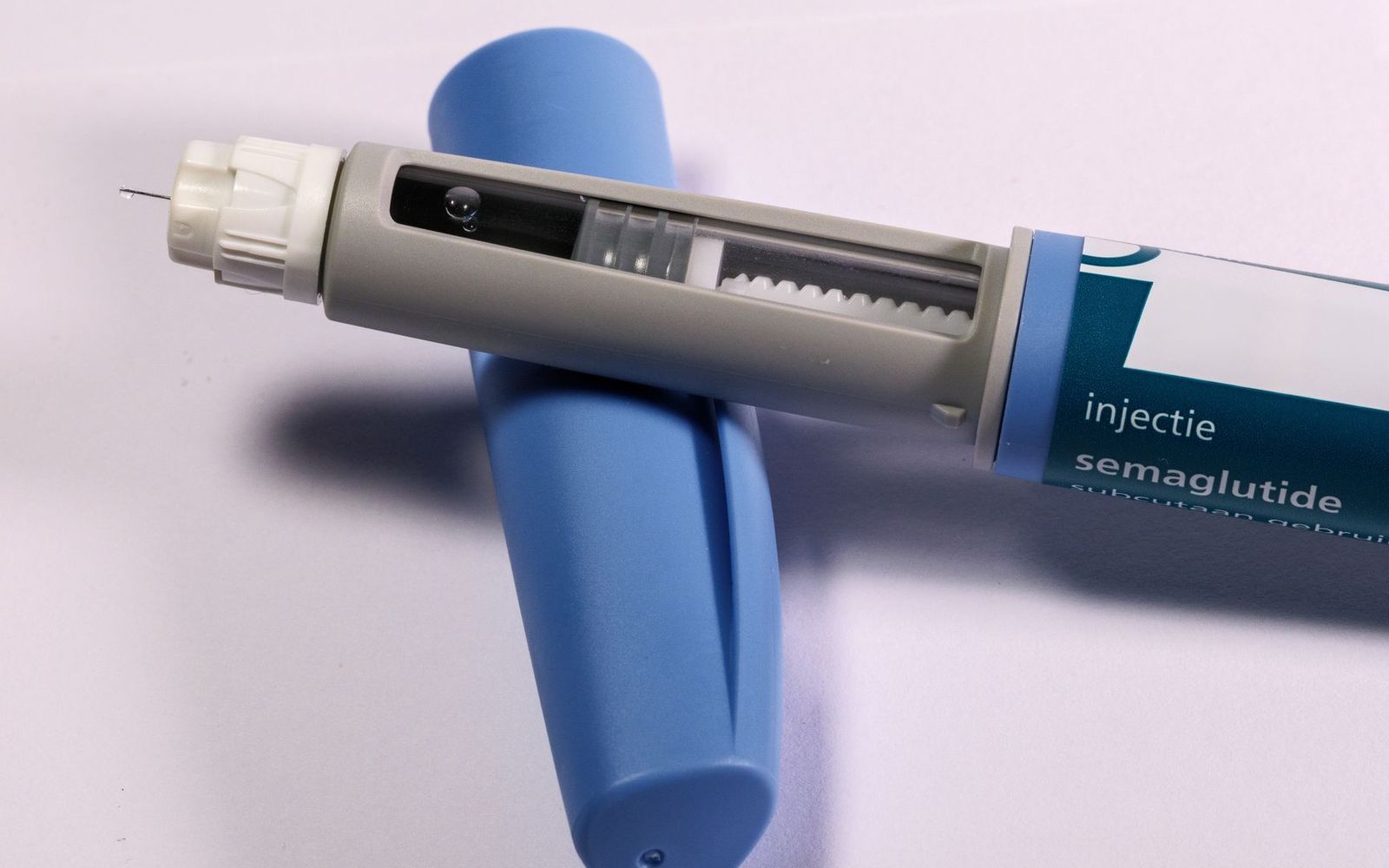
Wegovy's prescribing information, revised June 2026, lists three uses for the injection, all "in combination with a reduced calorie diet and increased physical activity". The third is "for the treatment of noncirrhotic metabolic dysfunction-associated steatohepatitis (MASH), formerly known as nonalcoholic steatohepatitis (NASH), with moderate to advanced liver fibrosis (consistent with stages F2 to F3 fibrosis) in adults."
The FDA's approval letter for that supplement (NDA 215256/S-024) was signed on August 15, 2025. It states the approval is granted "under accelerated approval", and the label carries the consequence in its next sentence: "Continued approval for this indication may be contingent upon the verification and description of clinical benefit in a confirmatory trial." Wegovy was not the first drug for this disease. The FDA approved Rezdiffra (resmetirom) for the same stage of disease on March 14, 2024.
MASH is fatty liver with inflammation and liver-cell injury; the trial scored it on biopsy by lobular inflammation and hepatocyte ballooning. Scarring is staged up to F4, which Cigna's policy equates with cirrhosis, and the label's wording, "moderate to advanced liver fibrosis (consistent with stages F2 to F3 fibrosis)", sets the range. The indication covers only that middle band, and each limit matters for who qualifies.
| Question | What the label says |
|---|---|
| Which disease | Noncirrhotic MASH with moderate to advanced liver fibrosis, "consistent with stages F2 to F3" |
| Fatty liver with scarring below F2 | Outside the indication |
| Cirrhosis (F4) | Outside the indication ("noncirrhotic"); the Medication Guide says "but not with cirrhosis of the liver" |
| Age | Adults; safety and effectiveness for MASH "have not been established" in children |
| Which product | Wegovy injection only. The tablets carry no MASH indication, and the label says the safety of the tablets and of the 7.2 mg injection has not been established in patients with MASH |
| Dose | 2.4 mg once weekly; 1.7 mg if 2.4 mg is not tolerated, with re-escalation to be considered |
| Alongside | A reduced calorie diet and increased physical activity |
| Weight | No BMI is printed in the indication. The label notes "limited information in patients with MASH and a BMI <25 kg/m2" |
Who should not take it, per the label
The contraindications are the same for every Wegovy use: a personal or family history of medullary thyroid carcinoma, multiple endocrine neoplasia syndrome type 2, or a prior serious allergic reaction to semaglutide or anything in the product. The label also says combining Wegovy with another semaglutide product or any other GLP-1 drug is not recommended.
Pregnancy is one place where the MASH wording differs from the weight-loss wording. For weight or heart risk, the label says to stop Wegovy when pregnancy is recognized. For MASH it says Wegovy "should be used during pregnancy only if the potential benefit justifies the potential risk to the fetus", because, it says, there may be risks to the mother and fetus from the underlying MASH with advanced fibrosis, and where the risk outweighs the benefit it advises stopping at least 2 months before a planned pregnancy "because of the long half-life of semaglutide." That is a conversation for the prescriber before conception, not a decision to make alone.
What the ESSENCE trial found
The approval rests on ESSENCE, published in the New England Journal of Medicine in 2025 by Sanyal and colleagues and funded by Novo Nordisk, which makes Wegovy. The abstract describes 1,197 adults with biopsy-confirmed MASH and F2 or F3 fibrosis, assigned 2 to 1 to semaglutide 2.4 mg or placebo for 240 weeks. What has been reported is part 1, a planned analysis of the first 800 participants at week 72, judged on repeat liver biopsies. Everyone also received standard care for their other conditions and lifestyle counseling. We read the abstract and the label's account of the trial, not the full paper.
| Biopsy outcome at 72 weeks | Placebo | Wegovy 2.4 mg | Difference (95% CI), label |
|---|---|---|---|
| Steatohepatitis resolved, fibrosis no worse | 34% | 63% | 29 points (21 to 36) |
| Fibrosis improved at least one stage, steatohepatitis no worse | 22% | 37% | 14 points (8 to 21) |
| Both: steatohepatitis resolved and fibrosis improved | 16% | 33% | 17 points (10 to 23) |
| Mean body weight change | -2.0% | -10.5% | -8.5 points (abstract: -9.6 to -7.4) |
The abstract reports the same results to one decimal place (62.9 against 34.3 percent, and 36.8 against 22.4). A third of people on placebo also saw their steatohepatitis resolve, so on our reading one person's improved biopsy does not by itself show the drug caused it. And these are tissue results at 72 weeks. Whether they translate into fewer people progressing to cirrhosis, liver decompensation, transplant or death has not been shown. The FDA's letter requires Novo Nordisk to complete NN9931-4553, which is ESSENCE's own registry number, and demonstrate exactly that; the FDA's announcement of the approval says the trial "will continue for a total of 240 weeks" for this purpose. Completion is scheduled for June 2029 and the final report for December 2029.
The people studied also shape who the result applies to. Per the label, median age was 57, 57 percent were women, 56 percent had type 2 diabetes, and 69 percent had F3 rather than F2 fibrosis. Only 0.6 percent were Black, and 7 percent had a BMI under 25, so on our reading the label's evidence in leaner and in Black patients is thin.
Side effects in the MASH trial were, per the label, consistent with Wegovy's other uses, and we cover those in what the GLP-1 labels report about side effects. Two MASH-specific figures appear in the label: fractures in 4.4 percent on Wegovy against 3.3 percent on placebo, and lipase above three times the upper limit of normal in 4.7 percent against 1.3 percent, an elevation whose clinical significance the label calls unknown without other signs of pancreatitis.
How F2 to F3 gets established
The trial enrolled people on biopsy. The label does not say how a prescriber must establish F2 to F3 outside a trial, and the two insurers we read fill that gap with their own rules. UnitedHealthcare's non-formulary Wegovy program for plans that exclude weight-loss drugs (2026 P 1445-4, effective May 1, 2026) asks for medical records showing F2 or F3 by one of three routes: liver stiffness on vibration-controlled transient elastography (FibroScan is its example), magnetic resonance elastography, or a liver biopsy within the past 12 months. It requires a gastroenterologist or hepatologist to prescribe or be consulted, an attestation that Wegovy will not be started at the same time as Rezdiffra for the same disease, and for renewal, a positive response such as "improvement in or stabilization of fibrosis" with no progression to cirrhosis. In its separate weight-loss program, for plans that cover weight-loss drugs, a request for Wegovy injection for MASH ("fibrosis stage F2 or F3") counts in place of the BMI criterion, and that program names no test and no specialist.
Cigna's criteria differ: they accept a biopsy within 3 years, or elastography or an ELF blood test within 6 months (ELF score 9.2 to 10.5), require at least one metabolic risk factor (such as central obesity, high triglycerides or high blood pressure) managed to the standard of care, add alcohol limits, and allow an endocrinologist as prescriber. We set those out in our guide to GLP-1 prior authorization criteria. Other plans set their own terms.
Sponsored option
Vetted Aug 19, 2026Affiliate link, we may earn a commission at no extra cost to you.

Sesame Our score 4.0/5
Telehealth / primary care
Pricing as of Aug 19, 2026
Telehealth visits from $34; weight-loss program $99/mo or $59/mo annual
What to do next
If an ALT result started this, our guide to a high ALT blood test walks through the causes and the FIB-4 thresholds, and the ALT above the healthy limit page sets out what that band means. You can place your own ALT with the lab result lookup, and your personal screening plan covers the other checks due at your age. If you are weighing Wegovy against the alternatives, our comparison of every approved GLP-1 lists each drug's indications, and Zepbound vs Wegovy covers the head-to-head weight trial; note that Zepbound's label carries no MASH indication.
Questions worth asking a clinician: what is my fibrosis stage, and how was it measured; is there any sign of cirrhosis; and if I start Wegovy, how will we judge whether the liver is responding?
Frequently asked questions
Is Wegovy approved for fatty liver disease?
For one part of it. The label covers MASH with F2 to F3 fibrosis in adults without cirrhosis. Fatty liver with scarring below F2, and cirrhosis, are outside the indication, and so are Wegovy tablets.
Do I need a liver biopsy to get Wegovy for MASH?
The label does not require one, though the trial used biopsies. The two insurers we read set their own rules: UnitedHealthcare's program for plans that exclude weight-loss drugs accepts transient or magnetic resonance elastography, or a biopsy within the past 12 months, and Cigna accepts a biopsy within 3 years, or elastography or an ELF blood test in a set range within 6 months.
Does Wegovy reverse liver scarring?
In ESSENCE, fibrosis improved by at least one stage without worsening of steatohepatitis in 37 percent on Wegovy and 22 percent on placebo at 72 weeks. Most people on Wegovy did not reach that endpoint, and whether the biopsy changes prevent cirrhosis is still being tested.
Can I take Wegovy for MASH if I am not overweight?
The indication prints no BMI. The label says information in patients with MASH and a BMI under 25 is limited, and 7 percent of trial participants were in that range.
What dose of Wegovy is used for MASH?
The label's maintenance dose is 2.4 mg once weekly, reached by stepping up, with 1.7 mg as the fallback if 2.4 mg is not tolerated.