What the labels report
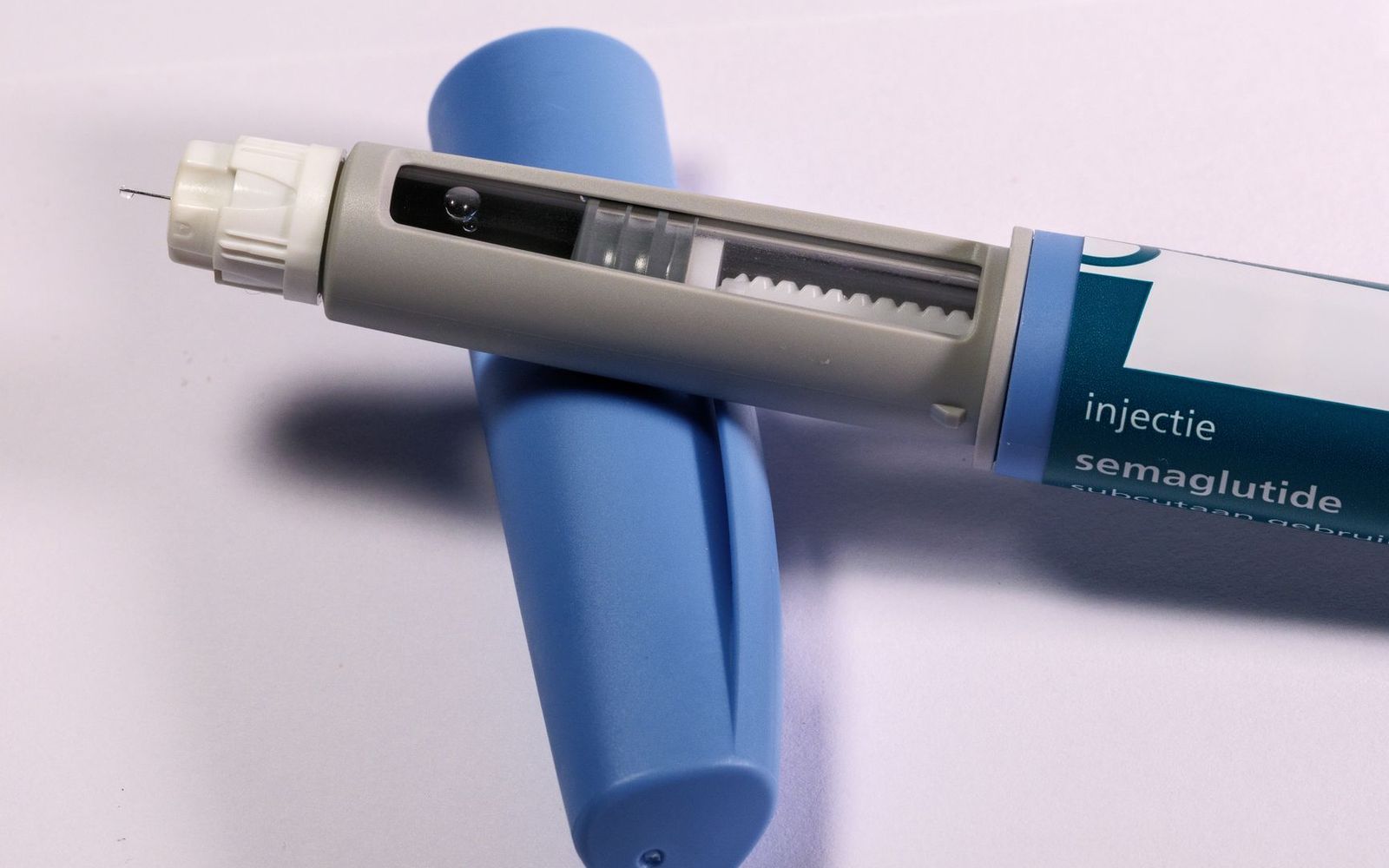
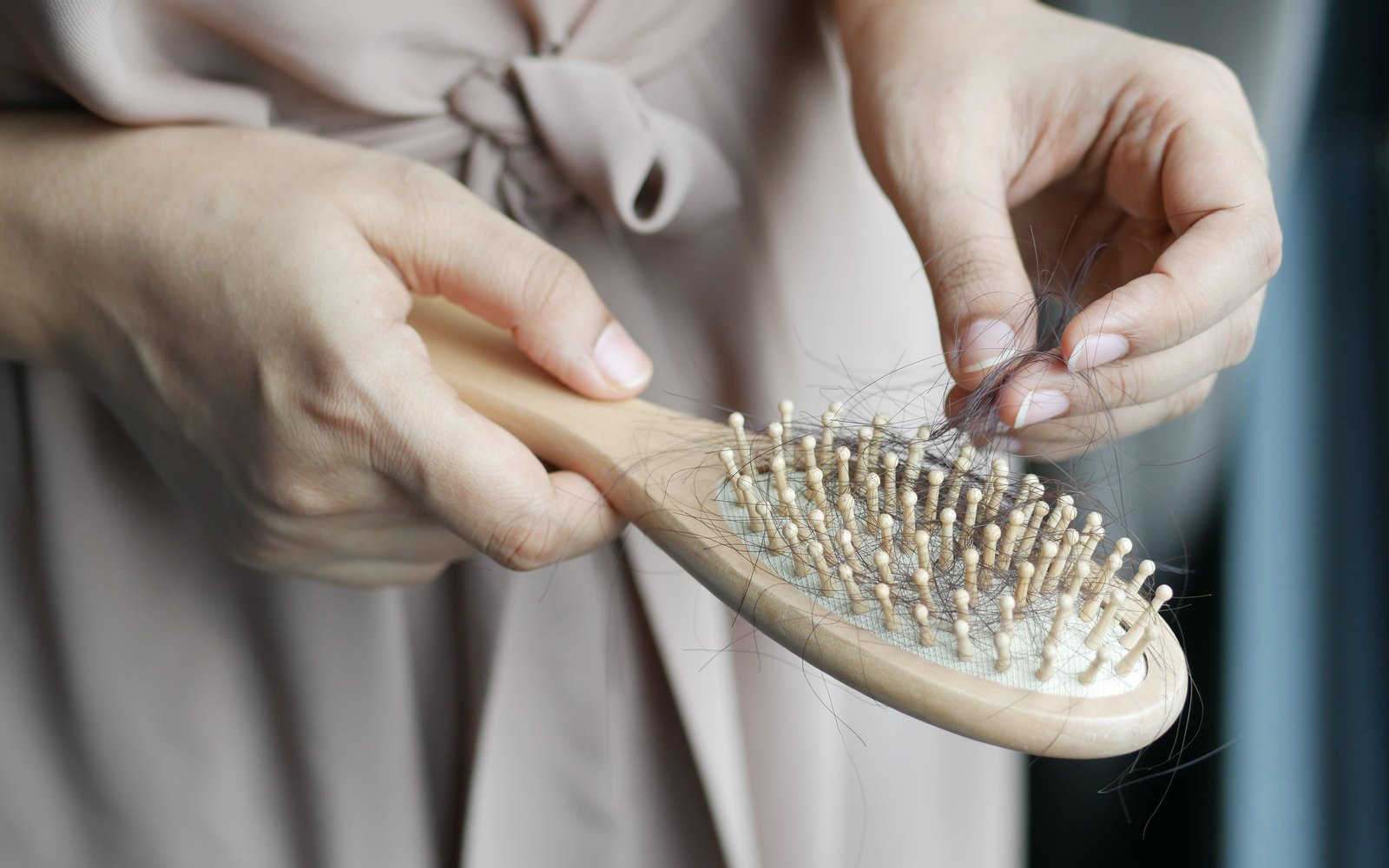
Hair loss appears throughout the Wegovy label. It is in the list of the most common adverse reactions in the highlights, it is a row in three adverse-reaction tables, and it has its own paragraph in section 6.1. That paragraph, in the label's own words: "Hair loss adverse reactions in WEGOVY injection-treated patients were associated with weight reduction. In a pool of studies 2, 3, and 4, hair loss was reported in 3.3% of patients treated with WEGOVY 2.4 mg (4% female, 0.9% male) and in 1% of patients treated with placebo (2% female, 0 male)." At the 7.2 mg dose the figure is 5.8 percent, split 8.4 percent of women and 0.2 percent of men. In the adolescent trial it was 4 percent on the drug and none on placebo.
Zepbound's label says the same thing about tirzepatide with the same sex split: "hair loss was reported more frequently in female than male patients in the ZEPBOUND (7.1% female versus 0.5% male) and placebo (1.3% female versus 0% male) treatment groups." It adds a detail worth having: no Zepbound-treated patient stopped the drug because of hair loss, and one placebo-treated patient did. Foundayo (orforglipron), the pill approved in 2026, reports the same pattern in its own section 6.1: "7% female versus 0.9% male" on the drug, against "3% female versus 0.7% male" on placebo.
| Product and dose | On the drug | On placebo | Women vs men on the drug |
|---|---|---|---|
| Wegovy 2.4 mg (adults, Table 3) | 3% | 1% | 4% vs 0.9% |
| Wegovy 7.2 mg (adults, Table 4) | 6% | 1% | 8.4% vs 0.2% |
| Wegovy 2.4 mg (ages 12 to 17, Table 5) | 4% | 0% | not reported |
| Zepbound 5 mg (Table 1) | 5% | 1% | 7.1% vs 0.5% (pooled doses) |
| Zepbound 10 mg | 4% | 1% | |
| Zepbound 15 mg | 5% | 1% | |
| Foundayo 5.5 mg (Table 1) | 4% | 2% | 7% vs 0.9% (pooled doses) |
| Foundayo 9 mg | 4% | 2% | |
| Foundayo 17.2 mg | 5% | 2% |
Ozempic is the same molecule as Wegovy at lower doses, approved for type 2 diabetes, and its label handles hair differently: "alopecia" sits in the postmarketing section, meaning it was reported after approval and was not measured at a reportable rate in the diabetes trials. Mounjaro (tirzepatide for diabetes) and Saxenda (liraglutide) do the same. So the rates above, plus Foundayo's, are the only ones the FDA labels carry, and they come from the weight-management trials.
Why the sex split matters
Read the label figures again. On Wegovy 7.2 mg, hair loss was reported by roughly one woman in twelve and by two men in a thousand. The labels do not explain the gap, and neither can we without inventing a reason, so we will not. What it does tell you is that the question "does this drug cause hair loss" has two different answers depending on who is asking. For a woman starting a GLP-1 for weight, it is a common enough side effect to plan for. For a man, the trial rate is under 1 percent, and the concern that applies to him comes from a different kind of evidence, below.
Is it the weight loss or the drug? What 2026 added
The label's phrase is "associated with weight reduction", which is the conventional explanation: lose a lot of weight quickly and the scalp sheds. Three papers in 2026 tested whether that is the whole story.
The largest is a July 2026 study in The BMJ from Penn Medicine. It emulated a trial using electronic records of adults with type 2 diabetes who started a GLP-1 drug, an SGLT-2 inhibitor or a DPP-4 inhibitor between 2019 and 2024: about 12,000 GLP-1 starters against 15,221 SGLT-2 starters and 11,238 DPP-4 starters. GLP-1 users had a higher rate of a new alopecia diagnosis, with a hazard ratio of 1.37 (95 percent confidence interval 1.08 to 1.73) against SGLT-2 inhibitors and 1.68 (1.28 to 2.20) against DPP-4 inhibitors. The effect was specific to non-scarring alopecia, the kind where follicles survive and regrowth is possible. In absolute terms the rates were low: 6.9 against 5.0 cases per 1,000 person-years in the SGLT-2 comparison, and 6.5 against 3.9 in the DPP-4 comparison, per the BMJ Group release. The authors state plainly that their data could not assess "severity, extent, duration and reversibility of alopecia after stopping treatment", and the association shrank after a calibration for unmeasured confounding.
A meta-analysis in Diabetes Research and Clinical Practice, also July 2026, pooled nine interventional studies with 4,114 GLP-1 users and found a risk ratio of 3.25 for hair loss against placebo (95 percent confidence interval 1.44 to 7.36), with a single-arm event rate of 3.9 percent.
The third paper is the one behind the September headlines. Researchers at NYU Grossman School of Medicine published a two-sample Mendelian randomization study in the Journal of Investigative Dermatology on September 3, 2026. Instead of following patients, it used naturally occurring genetic variants that raise expression of the GLP-1 receptor gene as a stand-in for higher activity in the pathway the drugs act on, drawn from two databases of 31,684 and 205,327 mostly White participants, and asked whether those variants track with male-pattern hair loss. They did, and the link held after adjusting for hypertension, insulin resistance and testosterone. NYU Langone's own summary of the result: men "already at risk genetically for the most common form of hair loss have a 7 percent added risk of losing their hair if they use drugs like Ozempic, Wegovy, and Zepbound".
Put the three together and the honest reading is this. The labels associate what they report with weight reduction. There is now a credible signal, in men, that the receptor pathway may also push hair toward the pattern type. Neither the BMJ cohort nor the genetic study can tell you what happens to any one person's hair, and neither measured whether it comes back.
Shedding or balding: which one you have decides everything
The American Academy of Dermatology draws the line the labels blur. Excessive shedding, which dermatologists call telogen effluvium, follows a stressor, and the AAD's list of triggers begins with having "lost 20 pounds or more". It arrives on a delay: "Most people notice the excessive hair shedding a few months after the stressful event." And it resolves on its own once the stressor passes: the AAD says that within six to nine months, hair tends to regain its normal fullness. If the stressor continues, the shedding can be long lived.
Pattern hair loss is a different process: a receding hairline or thinning crown in a man, a widening part in a woman, driven by hormones and genetics, progressive rather than self-limiting. That is what the NYU study is about, and it is the one that does not resolve when the weight stabilizes. The practical tell is the distribution. Shedding is diffuse, all over the scalp, handfuls in the brush and the drain. Pattern loss is regional. The AAD's advice is that a dermatologist "can tell you whether you have hair loss or excessive hair shedding", by history, a hair-pull test and, if a deficiency or hormone problem is suspected, a blood test.
Sponsored option
Vetted Aug 19, 2026Affiliate link, we may earn a commission at no extra cost to you.

Sesame Our score 4.0/5
Telehealth / primary care
Pricing as of Aug 19, 2026
Telehealth visits from $34; weight-loss program $99/mo or $59/mo annual
What to check before you buy a supplement
The AAD's list of causes of hair loss includes not getting enough biotin, iron, protein or zinc, and thyroid disease, and it notes that when the body gets enough of the missing nutrient, hair can regrow. On a GLP-1, which works by cutting how much you eat, protein is the one to look at first; our protein guide covers the target and our GLP-1 eating guide covers how to hit it on a suppressed appetite.
Two blood tests earn their cost when shedding is heavy. Ferritin measures iron stores, and the AAD lists too little iron as a cause of hair loss. TSH screens the thyroid, and the AAD lists thyroid disease as a cause of thinning that reverses with treatment. Both have a published cutoff, and either one being abnormal changes what you do next.
Biotin is the supplement people reach for, and the evidence for it in someone who is not deficient is thin. A 2017 systematic review in Skin Appendage Disorders found 18 published cases of biotin helping hair or nails, every one in a patient with an underlying deficiency or disorder, and concluded there is a "lack of sufficient evidence for supplementation in healthy individuals". It also has a cost. The FDA warns that biotin "can significantly interfere with certain lab tests and cause incorrect test results which may go undetected", and it has received reports of falsely low troponin results, a cardiac blood test. If you take a hair, skin and nails supplement, tell whoever draws your blood.
What treats it
For shedding, the AAD's treatment is time once the trigger passes. Its guidance on any medication suspected of causing hair loss is to ask the prescriber whether it is a known side effect rather than stopping on your own.
For pattern hair loss, two drugs carry FDA approval. Minoxidil is over the counter for both sexes; the Women's Rogaine 5 percent foam label reads "Use to regrow hair on the top of the scalp" and tells you not to use it if your hair loss is "sudden and/or patchy" or you "do not know the reason for your hair loss", which is the label's own way of saying it is for pattern loss, not for shedding. The AAD puts the wait for results at about 6 to 12 months. Finasteride 1 mg is a prescription tablet approved, in the Propecia label's capitals, for "MEN ONLY"; the label reports a 12-month trial in 137 postmenopausal women in which "effectiveness could not be demonstrated". For women with pattern loss, the AAD lists spironolactone, finasteride, flutamide and dutasteride as drugs a dermatologist may prescribe that "have received FDA approval to treat other conditions, but not" female pattern hair loss. Platelet-rich plasma, laser therapy and microneedling are also on the AAD's list, none of them a drug approved for the purpose.
About the Novo Nordisk hair-loss drug
There is not one. On September 22, 2026, Bloomberg reported remarks by Novo Nordisk's chief scientific officer, Martin Lange, at a Bloomberg roundtable: that the company "could leverage our scientific knowledge potentially moving into that space", and that it is "not necessarily what we'll pursue first". No compound was named, Novo's newsroom carried no announcement, and ClinicalTrials.gov lists no Novo Nordisk trial in alopecia (searched September 22, 2026; the same search returns 267 Novo trials in obesity). The company already sells the drugs whose labels report the side effect above. For a reader deciding whether to start or stay on a GLP-1 this year, the relevant facts are the label rates, the sex split, the AAD's six to nine month shedding window, and the two blood tests. Nothing in a roundtable remark changes any of them.
Frequently asked questions
Does Ozempic itself list hair loss as a side effect?
Ozempic's label lists alopecia among postmarketing reports, without a rate, because the diabetes trials did not record it at a reportable frequency. The percentages come from Wegovy, which is the same semaglutide molecule at the higher weight-management doses: 3.3 percent on 2.4 mg and 5.8 percent on 7.2 mg, against 1 percent on placebo. Compounded semaglutide has no FDA-approved label, so it carries no rate; our guide to what the FDA says about compounded GLP-1s covers that gap.
Will my hair grow back if I stay on the drug?
If it is shedding, the AAD's timeline is that fullness returns within six to nine months once the stressor passes. The BMJ authors could not measure reversibility in their data, so nobody has a population-level answer for GLP-1 users specifically. If it is pattern loss, it does not reverse on its own regardless of the drug.
Is there a GLP-1 that does not cause hair loss?
Not on the evidence available. Wegovy, Zepbound and Foundayo report hair loss at similar rates with the same sex split, the 2026 meta-analysis pooled the class rather than separating drugs, and the diabetes-dose labels for Ozempic and Mounjaro carry no rate at all. For how the approved drugs differ on everything else, see our comparison of every approved GLP-1.
Should I take biotin while on a GLP-1?
Only if a test shows you are deficient, which the review's authors describe as uncommon. The review found 18 reported cases of biotin use for hair or nail changes, all in people with an underlying deficiency or disorder. Biotin also interferes with certain lab tests and the FDA has recorded falsely low troponin results from it, so if you do take it, tell the lab. Protein intake, ferritin and TSH are the three things worth checking first.