Which drugs the Bridge actually covers
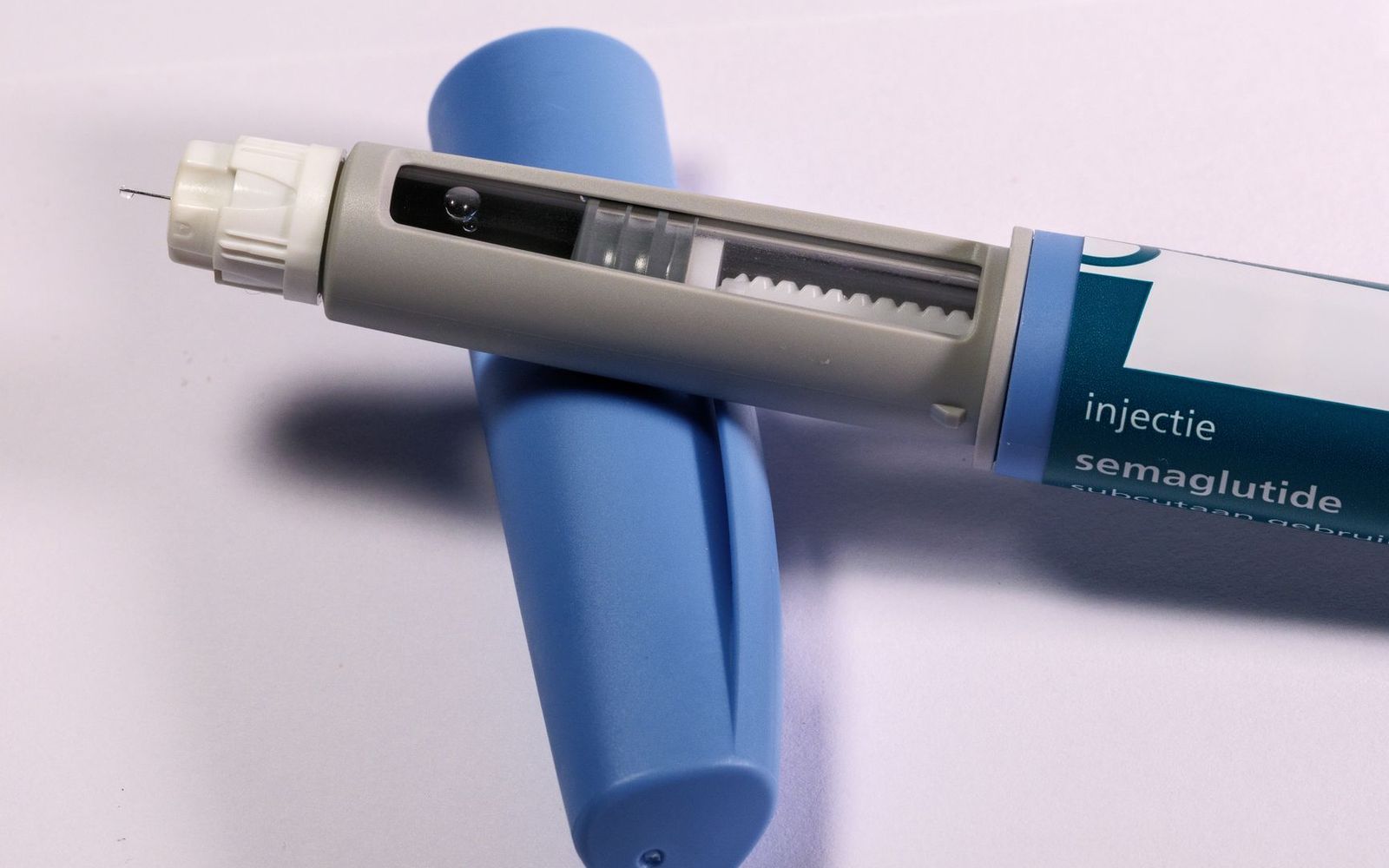
This is the part that decides whether any of the rest applies to you. Medicare lists the eligible products as Foundayo (tablet), Wegovy (injection or tablet), and Zepbound in the KwikPen form only, adding that the program does not cover single-dose Zepbound vials or pens.
Ozempic, Mounjaro and Rybelsus are not Bridge drugs. Neither is Zepbound in a vial. If you are taking one of those for weight, the July 2026 change does not reach you, and the question goes back to whether your prescription has an indication Part D is allowed to cover.
Who is eligible for the Bridge
Medicare publishes the criteria plainly, and they are worth reading before anything else on this page, because some people fall outside them. You must be 18 or older and meet one of three body mass index thresholds, two of which also require a listed condition when you start GLP-1 therapy.
| Your BMI | What else you need |
|---|---|
| 35 or higher | No additional condition required |
| 30 or higher | At least one of: diastolic heart failure (heart failure with preserved ejection fraction), uncontrolled high blood pressure, or chronic kidney disease at stage 3a or higher |
| 27 or higher | At least one of: prediabetes, a previous heart attack or stroke, or blocked arteries in the legs or arms with symptoms |
You also have to be enrolled in Medicare drug coverage. Part D enrollment is the gate: without a drug plan you cannot use the Bridge, whatever your BMI. And if you do not match one of the three rows above, the Bridge is closed to you, which is an answer worth having before you call a pharmacy. Whether Part D can cover you instead turns on what your prescription is for, not on your BMI, and the next two sections explain that.
Why Part D said no for so long
Part D's definition of a covered drug excludes the categories that state Medicaid programs are permitted to exclude, a list written in 1990 and pulled into Part D by cross-reference when the benefit was created. That list covers agents used for anorexia, weight loss or weight gain, alongside agents used to promote fertility and agents used for cosmetic purposes or hair growth. It has applied since Part D began in 2006.
Because the exclusion turns on what the drug is being used for rather than what it is, the same molecule can be covered for the person next to you and not for you. Part D does not ask what is in the pen. It asks what the prescription is for.
The same drug for a different reason
When the FDA approved Wegovy on March 8, 2024 to reduce the risk of cardiovascular death, heart attack and stroke in adults with established cardiovascular disease who also have obesity or overweight, that became a use Part D is permitted to cover. Semaglutide sold as Ozempic has been coverable for type 2 diabetes throughout.
A reinterpretation that would have let Part D cover obesity treatment directly was proposed for the 2026 benefit year and was not finalized on April 4, 2025, so the statutory position never moved. The Bridge arrived instead, built deliberately around it.
Sponsored option
Vetted Aug 19, 2026Affiliate link, we may earn a commission at no extra cost to you.

Sesame Our score 4.0/5
Telehealth / primary care
Pricing as of Aug 19, 2026
Telehealth visits from $34; weight-loss program $99/mo or $59/mo annual
What the Bridge costs and what it does not buy
| What | How it works |
|---|---|
| Drugs covered | Wegovy, Zepbound KwikPen, Foundayo. Not Ozempic, Mounjaro, Rybelsus or Zepbound vials |
| What you pay | $50 for a one-month supply, 28 or 30 days depending on the drug |
| Part D deductible | Does not apply |
| Counts toward your out-of-pocket cap | No. None of the $50 counts toward TrOOP |
| Extra Help / low-income subsidy | Not provided under the Bridge |
| Does your plan have to opt in? | No |
| Medicare Prescription Payment Plan | Cannot be used to spread the $50 across months |
| Dates | July 1, 2026 to December 31, 2027 |
Read the fourth row twice, because it changes the arithmetic. Part D now has a hard annual limit: once your covered drug spending reaches $2,100 in 2026, the plan pays the rest of the year. Money spent through the Bridge does not move you toward that number.
So $50 a month is roughly $600 to $650 a year, depending on whether your drug ships in 28 or 30 day supplies, and it buys you the medicine and nothing toward the cap. That can still be much the cheapest route. It is simply not the same as being covered, and a plan comparison that adds the two together will mislead you.
One group should read the Extra Help row especially carefully. If Extra Help, the low-income subsidy, normally brings your Part D copays close to zero, it does not apply here: CMS states there is no low-income subsidy under the Bridge. For those readers $50 a month is not a discount on the usual price, it is the whole price.
Which route you are in is not a choice
People often read this as two options to price against each other. It is not. Medicare states you are ineligible for the Bridge if you already get GLP-1 drugs covered through your Part D plan, or if you have type 2 diabetes, moderate to severe sleep apnea, or fatty liver disease, since your Part D plan may cover your GLP-1s for those.
So the useful question is not which is cheaper. It is which route you are in, and some people are in neither. If you have one of those diagnoses, your route is Part D and the Bridge is closed to you. Part D cost sharing may be more than $50 a month, but unlike the Bridge it counts toward the $2,100 cap. Compare your plan's copay against both numbers before you assume either is cheaper.
What BALANCE does, and why it is not your route
A separate demonstration, the BALANCE model, has CMS negotiate GLP-1 prices directly with manufacturers on behalf of state Medicaid agencies and Part D plans. Its drug list is wider than the Bridge's, covering all formulations of Mounjaro, Ozempic, Rybelsus and Wegovy, the KwikPen formulation of Zepbound, and Foundayo, for weight management as well as existing indications. That wider list is not a Medicare route. CMS says weight loss coverage under BALANCE launches in Medicaid as early as May 2026, that state Medicaid agencies may join through January 1, 2027, and that BALANCE is not launching in Medicare in 2027, with Part D implementation only potential. If you are on Medicare, the Bridge is your route through December 31, 2027, whatever your plan does.
What to do this week
Check whether you qualify at Medicare.gov/glp1bridge or by calling 1-800-MEDICARE. Your provider then has to send the prescription to the pharmacy, complete a prior authorization when one is requested, and certify that you are using the drug as part of a lifestyle program focused on diet and exercise. That certification is a real step, not a formality. Once approved, the prior authorization holds through December 31, 2027, including refills and dose changes, unless you switch GLP-1s. Ask your prescriber which indication is documented, because that decides your route before cost does. If you are comparing plans during the Annual Enrollment Period, ask each one whether it offers weight-loss drugs as a supplemental benefit, and remember that neither that nor the Bridge counts toward your cap. Our guide to GLP-1 coverage across Medicare, Medicaid and employer plans covers the other routes, and what these drugs cost without insurance sets the self-pay baseline.
Frequently asked questions
Does Medicare cover Wegovy?
Two ways. Part D may cover it for cardiovascular risk reduction in adults with established cardiovascular disease who also have obesity or overweight. Separately, Wegovy is one of the three products on the Medicare GLP-1 Bridge, which charges $50 for a one-month supply if you are eligible.
Does Medicare cover Ozempic?
Part D may cover Ozempic for type 2 diabetes, which is its approved indication. Ozempic is not on the GLP-1 Bridge, so the $50 route does not apply to it.
Is Zepbound covered?
Only the KwikPen. Medicare states the Bridge does not cover single-dose Zepbound vials or pens, so the form you are prescribed decides the answer.
Does the $50 count toward my $2,100 cap?
No. CMS states that no part of the $50 copay counts toward true out-of-pocket costs, and the Part D deductible does not apply either. It is cheap access, not covered spending.
I have type 2 diabetes. Can I use the Bridge?
No. Type 2 diabetes, moderate to severe sleep apnea and fatty liver disease all make you ineligible for the Bridge, because your Part D plan may cover GLP-1s for those uses instead. Ask your plan.
How long will the Bridge last?
It runs from July 1, 2026 through December 31, 2027. It is a time-limited program, so treat that end date as real when planning beyond next year.