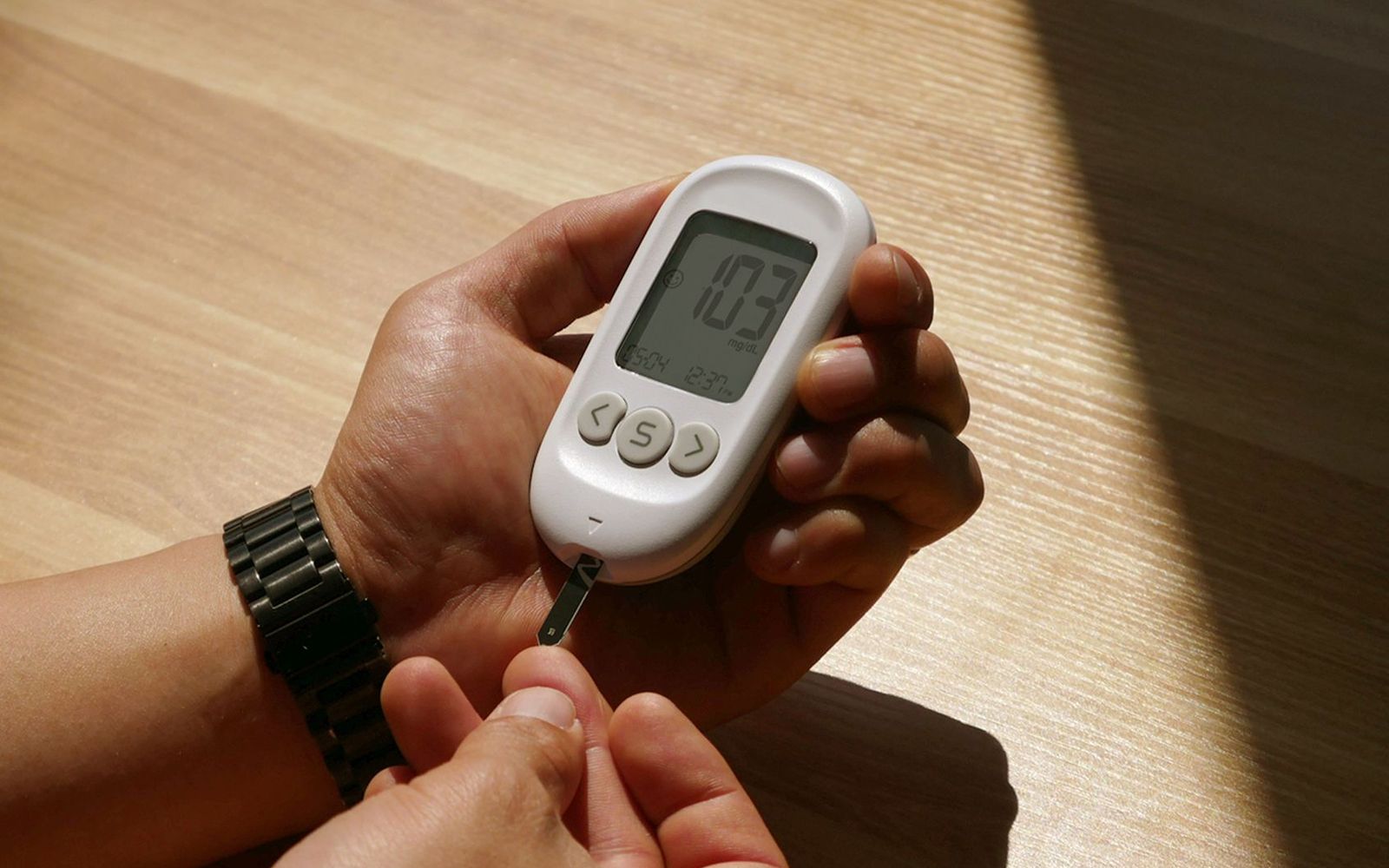
The trial that answers the question
In 2024, researchers randomized 41 adults with obesity and prediabetes or diet-controlled diabetes to either a 10-hour eating window with 80 percent of calories before 1pm, or a usual pattern with at least half the calories after 5pm. The crucial design feature: food was provided, not prescribed, so both groups ate identical calories and identical nutrients. Completion was 100 percent, and the mean age was 59.
Weight fell 2.3 kg in the time-restricted group and 2.6 kg in the usual-pattern group. The difference between them was 0.3 kg (95% CI -1.2 to 1.9). Glucose measures did not differ either. The authors' conclusion is the sentence the whole field turns on: in the setting of isocaloric eating, time-restricted eating did not decrease weight or improve glucose homeostasis, suggesting that any effects seen in prior studies may be due to reductions in caloric intake.
The same result appears when calories are prescribed rather than provided. A 12-month trial in 139 adults gave both arms the same daily calorie target and added an 8am-to-4pm window for one of them. Weight fell 8.0 kg with the window and 6.3 kg without, a difference of 1.8 kg that was not statistically significant (95% CI -4.0 to 0.4, p=0.11). Waist, BMI, body fat, lean mass, blood pressure and metabolic risk factors all pointed the same way.
What the syntheses say
Cochrane, February 2026. Twenty-two studies, 1,995 participants. Against regular dietary advice, intermittent fasting produced a weight difference of 0.33 percent (95% CI -0.92 to 0.26), rated low certainty because of risk of bias. Achieving at least 5 percent weight reduction: relative risk 0.98, very low certainty. Against no intervention at all, fasting did work, 3.42 percent, moderate certainty, which tells you that doing something beats doing nothing. The review had no dedicated funding.
The largest analysis by trial count, 167 trials and nearly 12,000 participants, put it bluntly: effectiveness in weight loss mainly depends on the extent of the energy restriction, regardless of the mealtime patterns. It also found that fasting regimens, but not continuous restriction, showed weight rebound after 12 weeks.
The one genuine signal comes from a 2025 network meta-analysis of 99 trials in the BMJ, which found alternate-day fasting beat continuous restriction by 1.29 kg (95% CI -1.99 to -0.59) at moderate certainty. Two caveats travel with it. That advantage appeared in trials under 24 weeks and disappeared in the 17 trials lasting 24 weeks or longer. And the trial with the best data on alternate-day fasting found LDL cholesterol 11.5 mg/dL higher than continuous restriction at 12 months, along with the worst dropout in the literature, 38 percent.
The muscle question, told accurately
You have probably seen the claim that 65 percent of the weight lost during time-restricted eating is muscle. It comes from the TREAT trial and it deserves careful handling, because it matters for anyone over 40 and because the circulating version is not what the paper reports.
What TREAT found: in its in-person subgroup, the time-restricted group lost 1.70 kg, of which 1.10 kg was lean mass, and the authors themselves wrote that this serves as a caution for populations at risk of sarcopenia. That is a real finding and worth knowing.
What the same paper also reports: the between-group comparison, which is the test of the intervention, was not significant. Total lean mass differed by 0.75 kg (99.7% CI -1.96 to 0.45, p=0.09). The measure that did reach significance was appendicular lean mass index, at 0.16 kg/m². The 65 percent figure is a within-group calculation, in a subgroup of about 25 per arm, on a secondary outcome.
Three details from the paper complicate it further. Grip strength and leg extension torque did not differ between groups, so function was unaffected. Step count fell significantly in the fasting arm, by 2,241 steps a day, which is an uncontrolled confounder for muscle loss. And the authors note they did not measure protein intake.
The meta-analytic picture is genuinely mixed: one 2024 analysis found a small fat-free mass disadvantage in energy-matched trials, a 2025 review of trials lasting six months or more found no significant difference, and a 2026 scoping review in adults 45 and over found differences that were generally small. An age-stratified analysis did find a larger signal in people 45 and over than in younger adults, but rates its own certainty as low to very low and calls the patterns hypothesis-generating.
The practical response is well evidenced: when exercise is included, fasting does not significantly alter fat-free mass compared with control.
Is fasting easier to stick to?
This is the strongest argument for it, and the evidence does not support it either.
Pooled across trials, dropout differs from control by 1 percent (95% CI -2 to 4, p=0.51). So fasting is not worse, but it is not better. Two independent sources find the experience favors plain calorie restriction: one meta-analysis found significantly lower hunger, lower fatigue and lower triglycerides with continuous restriction, and a sub-study of 209 adults with a mean age of 58 found continuous restriction produced greater increases in dietary restraint and greater reductions in disinhibition and hunger.
The alternate-day fasting trial documented the characteristic failure mode: participants ate more than prescribed on fast days and less than prescribed on feast days, while the calorie-restriction group generally met its targets.
One genuinely useful finding for people who hate counting: in a 12-month trial, an 8-hour window with no calorie counting at all produced an achieved deficit of 425 kcal a day, against 405 for deliberate counting. If the window is a mechanism you find easier than arithmetic, that is a legitimate reason to use it. It is just not a metabolic advantage.
What about metabolic switching and autophagy?
These are the mechanistic claims that make fasting sound like more than a way to eat less. The human evidence is thinner than the confidence around it.
Both foundational papers are narrative reviews, not studies. The best-known one had its central ketone figure corrected by roughly an order of magnitude in two published errata: as originally printed, ketones reach 2 to 5 mM by 24 hours; as corrected, 0.2 to 0.5 mM at 24 hours, rising to 1 to 2 mM by 48. The corrected figure sits at or below the threshold usually called nutritional ketosis. Measured directly in humans after an 18-hour fast, longer than a 16:8 window, beta-hydroxybutyrate reached 0.15 mM, which the authors described as modest.
Autophagy is worse served. Seven human studies have measured markers of it during fasting, and only one measured actual flux rather than a static snapshot; that one found a significant difference only at six months, from a post-hoc analysis at p=0.04, with no significant within-group change from baseline. Two studies found markers going down. The field's own 382-page consensus guidelines state that static measurements cannot distinguish increased production from reduced clearance, and that quantitative flux measurement is virtually impossible in patients.
The popular claim that autophagy switches on at 16 hours has no human source. The only human study with a real time course found markers decreasing, and no study has ever linked a fasting-induced autophagy change to a health outcome.
Sponsored option
Vetted Aug 19, 2026Affiliate link, we may earn a commission at no extra cost to you.
Sells compounded semaglutide and tirzepatide, which are not FDA-approved products.

Trimi Our score 3.3/5
Weight management / GLP-1
Pricing as of Aug 19, 2026
Compounded semaglutide from $99/mo on a 12-month prepay; $175 month to month
The mortality headline, handled properly
In March 2024, widely reported research claimed an 8-hour eating window was associated with a 91 percent higher risk of cardiovascular death. Two things need saying about it, and they point in different directions.
First, that figure was never peer-reviewed. It was a conference abstract, and the American Heart Association's own disclaimer states that abstracts presented at its meetings are not peer-reviewed and findings are considered preliminary until published in full. It is not indexed in PubMed.
Second, it should not be dismissed, because peer-reviewed work now points the same way. A 2025 paper from the same senior author, using national survey data linked to death records, reports that an eating duration under 8 hours was associated with higher cardiovascular mortality at a hazard ratio of 2.35 (95% CI 1.39 to 3.98), while the all-cause association did not survive many sensitivity analyses. An independent, larger cohort of 33,052 adults found a U-shaped relationship, with the lowest risk at an eating window of about 11 to 12 hours, higher all-cause and cardiovascular mortality below 8 hours, and higher all-cause mortality above 15 hours.
Both are observational and both rest on people reporting what they ate on two days, which is not the same as practising time-restricted eating. Short recorded windows skew toward illness, shift work, food insecurity and appetite loss, which is reverse causation, and the authors name residual confounding as the live alternative. A published methodological rebuttal exists and the authors have replied to it.
The honest summary: this is the only human mortality evidence on eating windows, two independent teams find the same direction, none of it can establish cause, and no randomized trial has ever measured mortality here at all.
Who should not do this
Anyone taking insulin or a sulfonylurea. A randomized trial with hypoglycaemia as its primary outcome found that fasting increased the rate of hypoglycaemia despite medication reduction, at a relative risk of 2.05 (95% CI 1.17 to 3.52). In a separate trial, glycaemic events affected 35 percent of participants on those medications in the first two weeks, again after protocolised dose reduction. The trial most often cited to show time-restricted eating is safe in type 2 diabetes achieved that by discontinuing sulfonylureas, halving short-acting insulin and putting everyone on a continuous glucose monitor. That is a managed de-escalation, not a property of the diet.
Older adults at risk of losing muscle. ESPEN's geriatric guideline is unusually direct: in overweight older persons, weight-reducing diets shall be avoided in order to prevent loss of muscle mass and accompanying functional decline.
Anyone with a history of disordered eating. The evidence here is genuinely thin: no randomized trial in healthy adults aged 35 to 65 has ever measured eating-disorder symptoms, and TREAT, sometimes cited as reassurance, did not measure them and excluded people with a history of anorexia or bulimia. What is well established is the base rate: among adults seeking obesity treatment, median age 44, binge-eating disorder is present in about 14 percent (95% CI 7 to 22) by clinical interview before any diet begins.
Also pregnancy, where the ADA notes the safety of intermittent fasting has not been studied.
What the guideline bodies say
NICE, in guidance last updated January 2026, has a section headed "Intermittent fasting in adults (no recommendations)". Its stated reason: the evidence showed improvement for a few outcomes, but for most outcomes it was not effective, and there were problems with the studies.
The 2026 joint cardiovascular-kidney-metabolic guideline from the AHA, ACC, ADA and ASN says time-restricted eating has demonstrated some weight-loss efficacy but studies indicate it is no more effective than a calorie-limited approach. The European obesity association reached the same conclusion. The Dietary Guidelines for Americans 2025-2030 do not mention fasting or meal timing at all, and its scientific advisory committee, like the one before it, examined the question and graded the evidence not assignable.
And the largest gap of all: Cochrane's review of fasting for cardiovascular prevention found no studies reporting all-cause mortality, cardiovascular mortality, stroke, heart attack or heart failure at any point in follow-up. We re-checked and found nothing since.
What we would actually do
If a shorter eating window helps you eat less without counting, it is a reasonable tool and the trials support that use. Keep it moderate: the observational mortality data, for what it is worth, points to an optimum around 11 to 12 hours rather than 8, and the shortest windows are where the signal sits.
What the evidence does not support is treating fasting as metabolically special. Matched for calories it performs the same as eating normally, its advantage disappears in longer trials, hunger and fatigue favor plain restriction, and the mechanistic story about ketones and autophagy has no human outcome behind it.
If you are over 45 and you do it, do resistance training and eat enough protein. The fat-free mass signal is larger in the over-45 subgroup, exercise abolishes it, and a 2025 trial in adults averaging 61 eating within a 9-hour window found net protein balance was better at 1.5 g/kg/day than at either 0.8 or 1.1, with no difference between those two. Compressing the window makes the protein question harder, not easier. That is covered in our guide to protein after 40.
Frequently asked questions
Is intermittent fasting better than just eating less?
No, on the best evidence. In a controlled-feeding trial where both groups ate identical calories, the difference was 0.3 kg (95% CI -1.2 to 1.9). Cochrane's 2026 review found 0.33 percent against standard dietary advice at low certainty, and a 167-trial analysis concluded that effectiveness depends on the extent of energy restriction regardless of mealtime patterns.
Does fasting make you lose muscle?
Possibly a little, and the popular version overstates it. In the TREAT trial the between-group difference in total lean mass was not significant (p=0.09), grip strength and leg extension did not differ, and step count fell by 2,241 a day in the fasting arm. Meta-analyses disagree with each other. The age-stratified signal is larger in people over 45, and adding exercise abolishes it.
Is the 16-hour autophagy claim true?
It has no human source. The only human study with a real time course found autophagy markers decreasing, the only proper flux measurement needed six months and was a post-hoc finding at p=0.04, and the field's own consensus guidelines say static markers cannot answer the question. No study has linked a fasting-induced autophagy change to a health outcome.
Was the study saying fasting causes heart deaths real?
The 91 percent figure was a conference abstract and was never peer-reviewed. However, a 2025 peer-reviewed paper from the same senior author reports a hazard ratio of 2.35 for cardiovascular mortality with eating durations under 8 hours, and an independent cohort of 33,052 people found a U-shape with the lowest risk around 11 to 12 hours. All of it is observational and cannot establish cause, and no trial has measured mortality.
Who should avoid intermittent fasting?
Anyone on insulin or a sulfonylurea, where a trial with hypoglycaemia as its primary outcome found a relative risk of 2.05 even after medication was reduced. Anyone pregnant. Anyone with a history of disordered eating. And older adults at risk of losing muscle, where ESPEN's guideline states that weight-reducing diets shall be avoided in overweight older persons.
When to talk with a clinician
Before starting if you take any medication that lowers blood sugar, if you are pregnant or breastfeeding, or if you have a history of an eating disorder. If you are over 65, or you have been losing weight without trying, discuss it before restricting further. And if the reason you are considering fasting is that other approaches have not worked, that is worth a proper conversation: treatments for obesity have moved a long way, and our comparison of GLP-1 programs covers what is now available.