Does creatine cause hair loss? What the trials found
Creatine has a hair-loss reputation that keeps people from trying the most studied supplement for strength. We read …
Longevity & Research
Covers longevity and healthspan research, including the studies behind our guides on exercise, sleep and supplements.
19 guides published, 62 reference pages edited
Part of the VitalDecades editorial team.
Creatine has a hair-loss reputation that keeps people from trying the most studied supplement for strength. We read …
Morning or night, with food or without: magnesium timing advice is everywhere. We looked for trials that tested …
Magnesium glycinate has become the default recommendation online, usually with the claim that it absorbs better and is …
For absorption, yes: in iron-depleted women, a dose of iron taken every other day is absorbed better than …
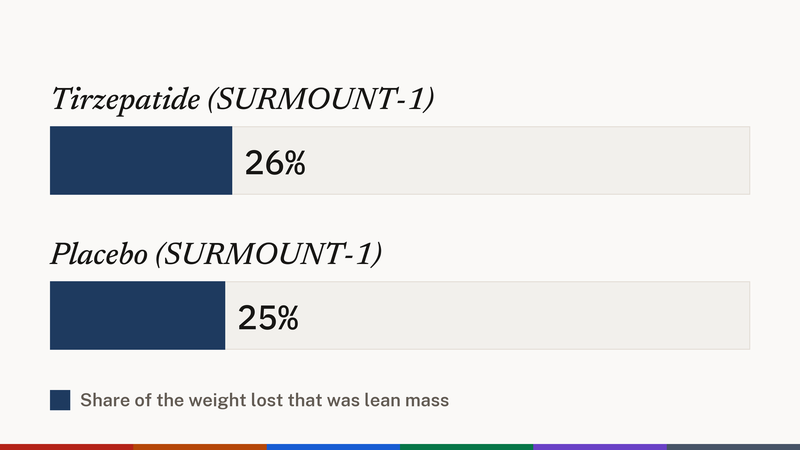
In the body-scan substudies of the two main obesity trials, lean mass made up 26 percent of the …
Yes, modestly. In placebo-controlled trials of adults with type 2 diabetes, berberine lowered A1C by roughly 0.4 to …
Yes, but only alongside resistance training. In adults over 50, meta-analyses of randomized trials find that creatine added …
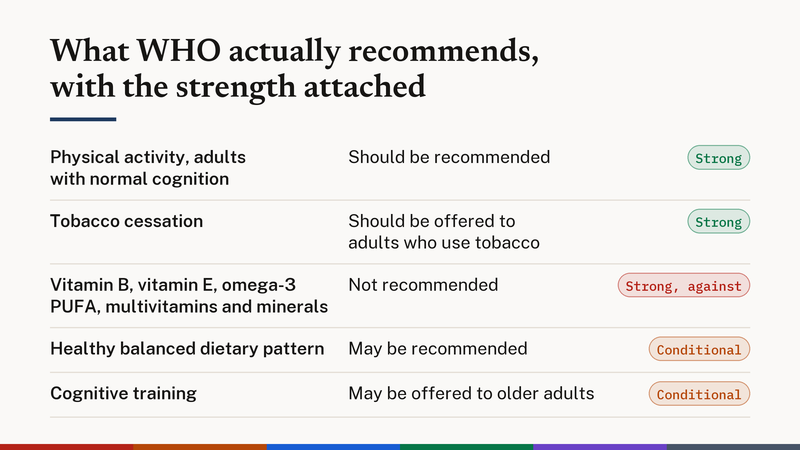
Almost every popular list of ways to reduce dementia risk rests on observational research: people who did a …
Most answers to this question are either a shrug or a sales pitch. There is a better option: …
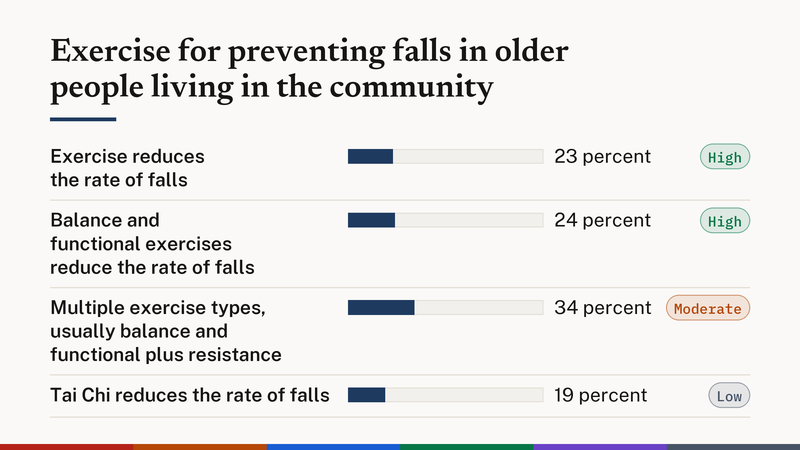
"Best exercise to prevent osteoporosis" is a question about broken bones, but almost all the trial evidence is …
In January 2026 the US Dietary Guidelines told adults to eat 1.2 to 1.6 grams of protein per …
Magnesium is sold for sleep, anxiety, cramps, migraine, blood pressure and blood sugar. It has decent evidence for …
Each page shows the date its sources were last checked, and any later correction.
Ranges: Normal, Prediabetes, Diabetes
Ranges: No anemia, Mild anemia, Moderate anemia, Severe anemia
Ranges: Normal, Prediabetes, Diabetes, A1C goal for many nonpregnant adults
Ranges: Traditionally considered not elevated, Traditionally abnormal; prompts evaluation
Ranges: Normal, Borderline high, High, Very high
Ranges: Reference interval, Below reference, Subclinical zone, Treatment generally considered
Ranges: Generally considered subnormal, Low-marginal gray zone, Above the gray zone
Ranges: At risk of deficiency, Inadequate for bone and overall health, Adequate for bone and overall health, Linked to potential adverse effects
We are not sending the newsletter yet. Leave your address and you will get the first one when we turn sending on, and nothing before it. Every number sourced and dated. Free, no spam.
We'll never share your email. We never sell your data.