The short answer
For ordinary prescriptions, blood pressure medication, statins, antidepressants, GLP-1s, an online prescriber has the same authority as any other licensed clinician. There is no special federal restriction to clear.
For controlled substances the picture is different, and it is temporary. Right now a clinician who has never met you in person can prescribe you testosterone or a stimulant after a video visit. That is only true because of a rule with an expiry date on it.
Federal permission is also not the whole rule. States set their own telemedicine prescribing requirements, and some are stricter than federal law on what counts as a real evaluation.
Why there is a rule at all
The Ryan Haight Online Pharmacy Consumer Protection Act of 2008 is the baseline law (21 U.S.C. 829(e), with the telemedicine definition at 21 U.S.C. 802(54)(A) to (G)). Under it, a prescribing practitioner may remotely prescribe controlled substances only after conducting at least one in-person medical evaluation of that patient, subject to certain exceptions. Once a practitioner has done one in-person evaluation, the Act's remote-prescribing requirements no longer apply to that specific practitioner-patient relationship. It is not a general clearance: an in-person visit with your own physician does not free a different online prescriber to write you a controlled substance.
That is the law telehealth has been suspending, extension by extension, since 2020.
What the current rule allows, and when it ends
The DEA, jointly with the Department of Health and Human Services, issued the Fourth Temporary Extension of COVID-19 Telemedicine Flexibilities for Prescription of Controlled Medications. Its own dates section is unambiguous: this rule is effective January 1, 2026 through December 31, 2026. The regulation it amends runs the authority from May 12, 2023 through that same end date.
Under it, a DEA-registered practitioner may prescribe Schedule II to V controlled medications through audio-video telemedicine, including Schedule III to V narcotic medications approved by the FDA for maintenance and withdrawal management treatment of opioid use disorder through audio-only encounters, without ever having conducted an in-person medical evaluation. The rule sets conditions: among them, the practitioner must be authorized under their registration to prescribe the basic class of controlled substance on the prescription, so a registration limited to Schedules III to V does not reach a Schedule II drug.
The DEA's stated reason for extending rather than finalizing is that it needs more time to write permanent regulations. It published a proposed Special Registration for Telemedicine framework on January 17, 2025 and received over 6,475 comments on it. The agency's stated direction is a permanent framework, not an indefinite series of extensions.
Which of your prescriptions this actually covers
This is where most coverage of the subject goes wrong, because "controlled substance" is a specific legal category and not a synonym for "serious medication." The DEA's Diversion Control Division publishes an alphabetical index of controlled substances and their schedules; the schedules themselves are set in 21 CFR 1308.11 to 1308.15. Reading that index against the medications sold by telehealth companies sorts them cleanly.
| Medication | DEA schedule | Does the telemedicine rule apply? |
|---|---|---|
| Testosterone | Schedule III | Yes |
| Amphetamine (Adderall) | Schedule II | Yes |
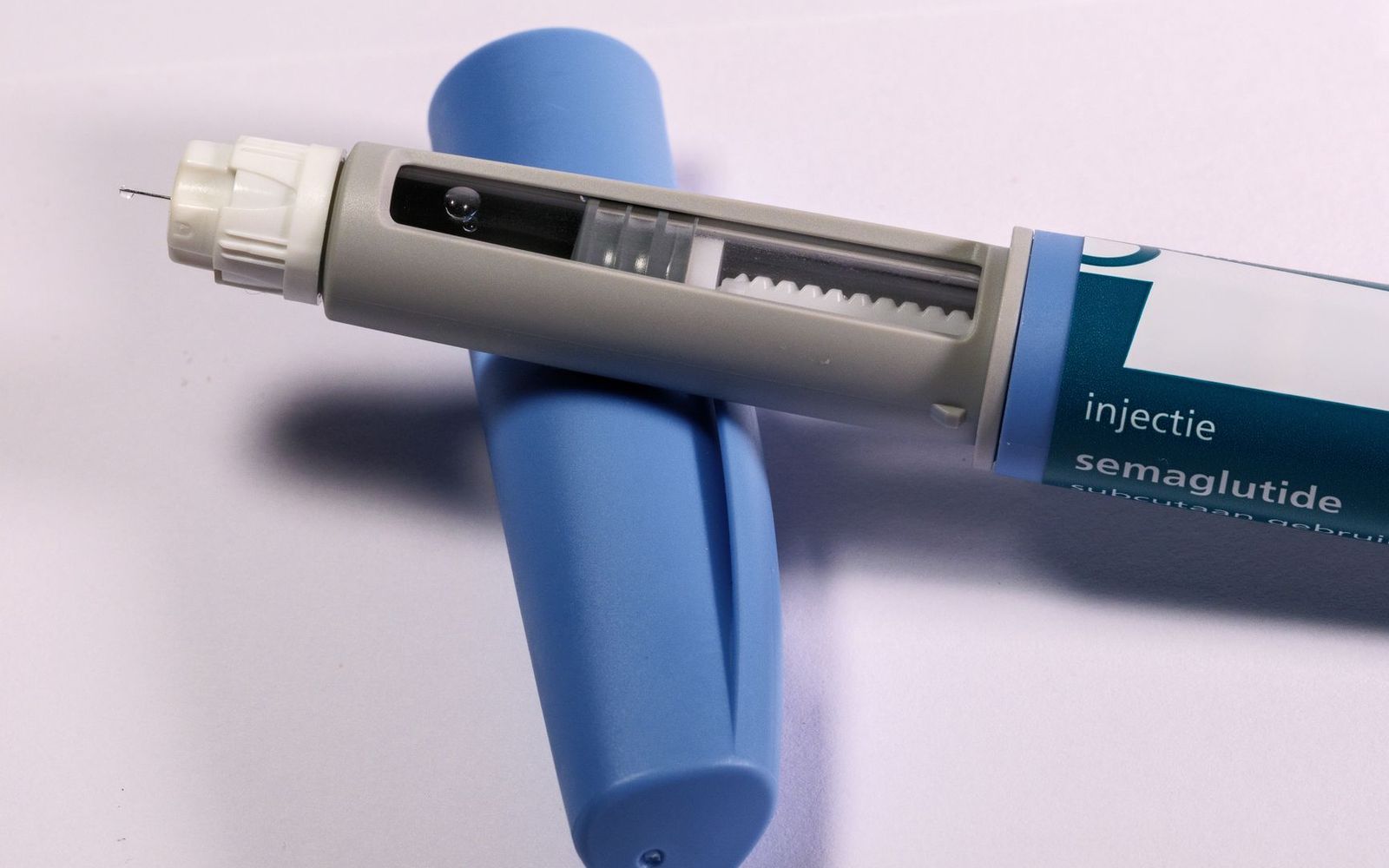
| Semaglutide (Wegovy, Ozempic) | Not on the list | No |
| Tirzepatide (Zepbound, Mounjaro) | Not on the list | No |
A missing name proves the lookup returned nothing, not by itself that a drug is unscheduled, so the check is only worth as much as its control. Testosterone and amphetamine were both found in that same file by the same method, which is how we know the search works. Semaglutide and tirzepatide return nothing.
So if your interest in this rule is your GLP-1 prescription, it does not affect you, and December 31 changes nothing about how those drugs are prescribed. If you take testosterone or a stimulant through a telehealth service, it affects you directly.
Sponsored option
Vetted Aug 19, 2026Affiliate link, we may earn a commission at no extra cost to you.

Sesame Our score 4.0/5
Telehealth / primary care
Pricing as of Aug 19, 2026
Telehealth visits from $34; weight-loss program $99/mo or $59/mo annual
The separate question worth asking about GLP-1s
The real fault line for online weight-management prescriptions is not scheduling. It is whether you are getting the FDA-approved product or a compounded version of it.
The FDA's position is plain: compounded drugs are not FDA approved, which means the agency does not review compounded drugs for safety, effectiveness or quality before they are marketed. As of May 31, 2026 it had received 990 reports of adverse events associated with compounded semaglutide and more than 730 associated with compounded tirzepatide, and it says such reports are likely underreported. It has also received multiple reports of adverse events, some requiring hospitalization, that may be related to dosing errors with compounded injectable semaglutide, including patients prescribed doses beyond what is in the approved label.
The shortages that allowed mass compounding were declared resolved in December 2024 for tirzepatide and February 2025 for semaglutide, and the enforcement discretion windows for compounders closed during 2025. Since September 9, 2025 the FDA has warned telehealth companies about how compounded GLP-1s are marketed in three rounds, of 58, 30 and 25 warning letters. That is 113 letters by our own count of the agency's announcements; the FDA publishes them individually rather than a running total. We cover that record in full in our guide to what the FDA says about compounded semaglutide and tirzepatide.
Across the programs we have checked, compounded semaglutide is advertised from $99 to $199 a month, but read the low end carefully: Trimi's $99 means $1,188 charged once a year, not $99 taken monthly. Sellers' own pages also quote higher than their headline. SHED listed $199 and $249 for the same product on the same day, and its price rises at maintenance doses; Bodybuilding Health+ shows a $179 first month struck through from a listed $279.
Brand medication is not automatically the expensive option any more. Manufacturer self-pay for Wegovy tablets and Foundayo starts at $149 a month, which is below SHED's $199 month-to-month compounded price, while Zepbound runs $299 to $449 on its 45-day refill program and $499 to $699 without it, and Mounjaro $499. The honest comparison is the price each route will actually charge you at checkout, and our guide to what these drugs cost without insurance lists every published figure. Any company selling a compounded drug should tell you so, and name the pharmacy, before you pay.
What to ask about a controlled-substance prescription
- Is the medication FDA-approved or compounded? If the answer is vague, treat it as compounded.
- Is my prescriber licensed in my state? Prescribing is regulated state by state, and this is the question a legitimate service answers without hesitating.
- If this is a controlled substance, what happens after December 31, 2026?
- What am I actually subscribing to? Separate the visit fee, the membership and the medication cost, because a low headline price often covers only one of the three.
- Can I reach a clinician, not just support? The difference between a clinical service and a storefront shows up when something goes wrong.
One disclosure worth making here, because this page is about where to spend money. We earn a commission from some telehealth companies, and we explain how we choose them on how we pick. Getting the brand product covered through your insurance or a manufacturer savings program pays us nothing, and for many readers it is the better deal.
Frequently asked questions
Can an online doctor prescribe testosterone without an in-person visit?
Yes, through December 31, 2026. Testosterone is a Schedule III controlled substance, and the DEA and HHS fourth temporary extension permits DEA-registered practitioners to prescribe Schedule II to V medications over audio-video telemedicine without a prior in-person evaluation. That rule expires at the end of 2026 unless it is extended again.
Does the DEA telemedicine rule affect my Wegovy or Zepbound prescription?
No. Semaglutide and tirzepatide are not controlled substances and do not appear on the DEA's schedules, so the rule does not govern them. GLP-1 prescriptions are unaffected by the December 31, 2026 date.
What happens if the DEA rule is not extended again?
The underlying Ryan Haight Act requirement returns: a practitioner would need at least one in-person medical evaluation of you before prescribing a controlled substance remotely. That exemption attaches to one practitioner-patient relationship rather than to you generally, so the visit that protects your continuity is one with the prescriber you intend to keep using.
Is compounded semaglutide the same drug as Wegovy?
No. Compounded versions are not FDA approved, and the FDA does not review them for safety, effectiveness or quality before they are marketed. The agency had logged 990 adverse-event reports for compounded semaglutide as of May 31, 2026, along with reports of dosing errors serious enough to require hospitalization, and it says such reports are likely underreported. Compounded versions are cheaper, and that is the trade you are making.